
“What maximum number of grafts/follicles can a surgeon do in a hair transplant operation?” & “can we do more?” are some of the most-searched questions from hundreds of hair transplant operation candidates. This is an understandable inquiry; cosmetic surgery is a big deal for hair transplant in Turkey patients. They believe in the myth of the “maximum.”
The “myth” of the maximum declares; why not just do a massive procedure of, say, 5000 grafts; get the best results; avoid additional future surgeries?
Beware! Things are not as simple as it often is in medical procedures. Let us unmask the “myth” starting from scratch.
1. Change Your Perspective: Needs Not Wants
It is not necessarily about what you want but what you need in an aesthetic surgery like a hair transplant.
Most patients do not need 5000 to 6000 grafts to be implanted in a single setting. Generally speaking, the above-suggested numbers are to cover an entirely bald scalp “front to back” with desirable density.
Often, patients consult the clinic before reaching such a severe level of hair loss. It is more common that patients planning a hair transplant operation have thinning isolated to particular regions of the scalp. Therefore, in most cases, during a hair transplant operation, the surgeon transplants around 2500-3000 grafts per session.
Prioritize your needs, not your wants; there is only a limited number of grafts in the donor area. Once gone, they are gone for good. It is better to use only the needed number to keep the remainder for future wants.
Even though the “maximum” sounds promising regarding the expected results, “the more, the merrier” does not always hold for an aesthetic surgical procedure. Over-harvesting may result in a patchy donor area, and as a result, achieving the maximum in numbers might result in hair loss in the donor region.
Some clinics might offer eye-blinding promises of over 5000 grafts in a single setting, disregarding additional factors equally decisive in their influence on the maximum number of grafts a surgeon can do.
What if the patient’s “front to back” scalp area is completely thinning? What if the patient does require 5000-6000 grafts to treat the hair loss? Can we, indeed, do 5000? That is a very big “if.” Let us remember the primary factors that account for the answer.
2. Patient-Related Determinative Factors of Transplantable Graft Numbers
When it comes to an aesthetic surgical procedure like a hair transplant operation, one numerical “maximum” is meaningless. A hair transplant surgery must be tailor-made for each patient. Therefore, besides prioritizing needs over wants, various factors influence the number of grafts for each patient.
a. Tissue quality
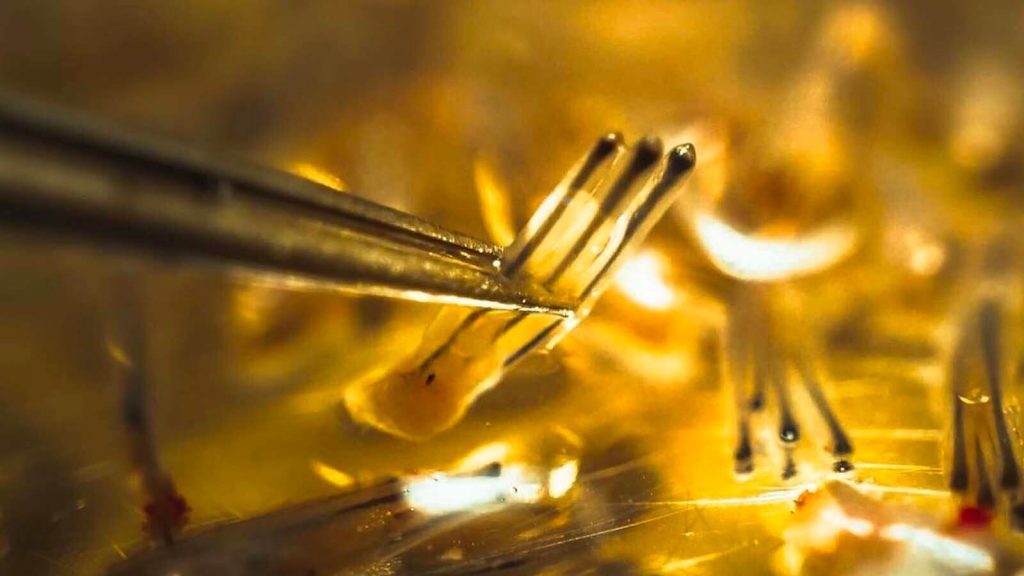
Let us begin with the basics. What is a graft? A group of hair follicles buried under the skin, consisting of one, two, three, or four hair roots comprising a single follicular unit, refers to graft. In a hair transplant operation, the surgeon collects the units in the donor areas to plant these follicles into the balding areas. As a result, during the process of extraction and transplantation, the quality of the tissue, namely its flexibility, is vital for the best results.
Unhealthily hardened tissue will obstruct the smoothness of the procedure by making it difficult to extract the follicles, which may deform the grafts. Damaged follicles are not suitable for hair transplant surgery. Likewise, unhealthily soft tissue will complicate the procedure. Soft tissue might lead to the cutting of hair follicles, making them unusable. Therefore, the tissue quality influences the number of grafts extracted for transplantation.
b. Quality of hair follicles
In all hair transplant operations, surgical micro-cuts are unavoidable. As a result, an aesthetic surgical procedure like a hair transplant requires strict precision from the surgeon. It is crucial to perform each micro-cut respecting the appropriate width and depth of cuts. Hair follicle quality is decisive when making micro-cuts.
Thick follicles require broader cuts, whereas narrower cuts are appropriate for transplanting thin follicles. As a result, the bigger the cut, the lesser the number of cuts, and the lesser the number of transplanted hair follicles; the smaller the cut, the bigger the number of cuts, higher the number of transplanted hair follicles.
The hair transplant surgery at Vera Clinic will be performed after our experts determine the thickness of your hair. As a result, the lack of visible traces enables the patient not to detect the difference in cut width and depth. Nevertheless, hair follicle quality is vital to reach the best results after a smooth procedure.
c. Blood circulation quality
To maximize the lifespan of hair follicles, the surgeon must be precise while performing the cuts not to damage the blood circulation. If micro-cuts injure the tissue, the harm will disrupt the circulation of blood, which endangers the smoothness of the transplantation process. Hair follicles might not survive, leading to possible deformations and consequent hair loss.
d. Hair loss stage
To decipher the number of grafts required for the hair transplant operation, the medical expert needs to measure the patient’s degree of hair loss. Surgeons usually go for the Hamilton-Norwood scale to determine the intensity of hair loss defined in ascending degrees. Higher order stages will require more grafts, up to 8000+. Additionally, patients might require up to 3 operations for the best results.
e. Donor area size
There is a direct proportion between the number of grafts and the extent of the transplant area. The bigger the size of the transplant region, the greater the number of hair grafts.
In addition, the surgeon must extract hair follicles with the preciseness of a craftsman, as decently as balanced, to avoid appalling traces on the nape.
As you can see, donor area size affects the number of grafts a surgeon can do in a hair transplant operation.
f. Longevity of the operation
Keeping the above-discussed points in mind, patients must also consider the duration of the surgical procedure. In general, a hair transplant surgery takes around 5-8 hours. If preserved in optimal conditions, hair follicles stay alive for 12-14 hours. Beyond the threshold of survival, grafts are useless as dead. Hence, do not think of hair follicles as forever-living entities; there is a time limit to the “maximum” number of transplantable grafts given the bounded duration of the operation.
On top of the above-mentioned patient-specific factors, there are factors beyond the patient subjectivity that will be crucial regarding the number of grafts a surgeon can do.
3. Clinic Quality
To successfully stage a demanding hair transplant operation, patients must ensure that the clinic is well equipped to handle the surgical procedure. A challenging hair transplant procedure must only be performed via the FUE technique that allows for the transplantation of the maximum number of grafts.
Furthermore, the clinic that stages the operation must be comfortable with such a size strip surgery. The hair transplant clinic must have an experienced medical team with proven expertise in dissecting and planting this many grafts.
Therefore, do your preliminary research on the medical facility carefully before attempting a hair transplant operation not to put the results at risk.
Our essential guide is happy to help point you in the right direction leading you to your brand-new hair. As you can see, a higher number of grafts mean nothing concerning the successful results of the operation. Your essential, go-to criteria must be the maximum survival rate of grafts that guarantees a natural-looking brand-new hair you will love.
Nevertheless, it is impossible to reach a conclusive answer regarding the maximum number of follicles to be transplanted in your hair transplant operation without getting in touch with our medical experts. You are welcome here, at our Vera Clinic, to discuss your needs and wants at any time. Feel free to contact us today to discuss your requirements, and we’ll match the proper treatment for you.